












Exclusive: Why AI's Biggest Impact on International Health Insurance is Yet to Come - AXA Health International
- Written by: iPMI Global
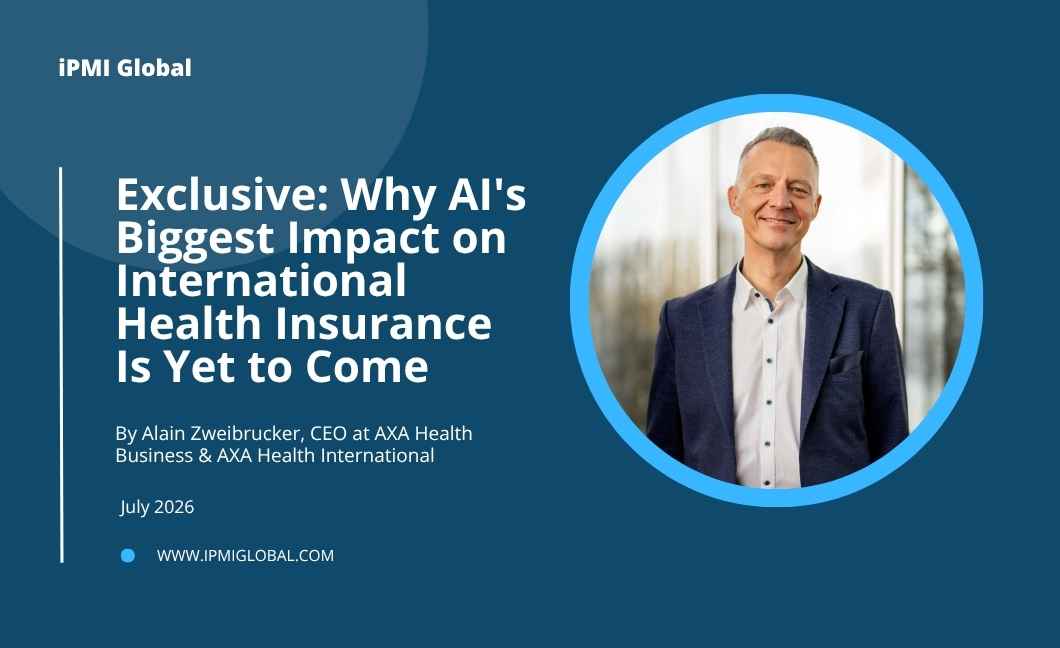
By Alain Zweibrucker, CEO at AXA Health Business & AXA Health International
Healthcare insurance is an inherently complex product to design and deliver. Success depends on creating cover that is fit for purpose, efficient to administer and flexible enough to adapt to changing needs – because behind every policy is a person who needs it to work well when it matters most.
For internationally mobile individuals, that complexity increases significantly. Coverage must operate across multiple healthcare systems, provider networks and regulatory environments, often in different languages and cultural contexts. The same medical condition or claim can look very different depending on where it arises.
As a result, international private medical insurers have always sought new ways to improve efficiency and consistency. Over the past few years, that drive has increasingly centred on one capability: artificial intelligence (AI).
Some of the ways AI is being used today
AI is no longer an emerging technology. It is already embedded in many of the processes that define how international health insurance is managed, helping insurers handle complexity more efficiently across markets.
At AXA Health Business, these capabilities are operational. Over the coming months, the same approach will be extended across AXA Health International, deepening the infrastructure that underpins how we serve our globally mobile membership. For example, we're already using machine learning at the point of reimbursement to optimise our claims management process. Where a request is assessed as low risk based on historical patterns, the system can approve payment automatically without human intervention. This helps speed up reimbursement for members while allowing claims teams to focus their expertise on more complex or potentially suspicious cases where human oversight adds the greatest value.
Alongside this, we’re using AI to interpret unstructured medical information submitted with`` claims. Doctors’ free-text descriptions on invoices are analysed and mapped to standardised clinical codes, including the WHO’s international classification of diseases. This improves consistency in how medical conditions are recorded and gives insurers a more accurate understanding of customer health profiles, treatment needs and care pathways.
Then there’s fraud detection. AI can analyse care pathways and reimbursement requests in real time to identify inconsistencies or anomalies that may indicate errors or potential fraud at the point of submission. This strengthens oversight at the point of reimbursement, reduces unnecessary leakage and helps protect premium stability for customers.
For members, these capabilities mean that at what is often a difficult and stressful time, the claims process works efficiently and accurately. For brokers and employers, they provide confidence that claims are being assessed accurately and that healthcare spend is being managed responsibly across different markets.
But this is only the beginning. While these applications are already helping to streamline claims processing, improve data quality and strengthen controls, their wider significance lies in what they enable next - a deeper, more connected understanding of health that can support earlier insight and better outcomes long before a claim is ever made.
Turning data into health intelligence
Every interaction within healthcare generates data. Claims submissions, treatment records, prescriptions and referrals all provide valuable insight into an individual's health journey.
Historically, much of this information has existed in isolation. Data has been fragmented across providers, systems and geographies, making it difficult to identify broader patterns or emerging risks.
AI is helping to change that. By analysing information at scale, it enables insurers to build a more complete picture of healthcare utilisation and population health trends. Claims data becomes more than a record of what has already happened; it can help identify where intervention may be needed in the future.
That shift is important because many of the conditions driving the highest healthcare costs globally - including cancer, cardiovascular disease, musculoskeletal disorders, respiratory illness and mental health conditions - often develop over time. Opportunities frequently exist to identify risks earlier and support people before a condition becomes more serious.
The ability to identify those risks earlier is valuable in itself. But its real significance lies in what can be done with that insight.
Prevention, not just treatment
Healthcare insurance has traditionally been built around treatment and reimbursement. When someone becomes ill, insurance helps them access care and covers the associated costs. That remains essential. But if insurers can use data and technology to identify risks earlier, they also have an opportunity to help prevent illness from developing or escalating in the first place.
When emerging patterns are identified within healthcare data, insurers can facilitate preventative screenings, set up specialist referrals, provide targeted health coaching or connect members with appropriate clinical support before a condition worsens. These are not marginal indicators, but meaningful, actionable signals that have the potential to change the trajectory of someone's health entirely. The aim is simple: to help people stay healthier for longer. That is not just a better outcome for members, it is the most sustainable direction for the industry, and one the international health insurance sector has both the tools and the responsibility to pursue.
This is where the industry's most important work lies. Not just funding healthcare after illness occurs but using the intelligence now available to move earlier and more effectively. Prevention can no longer be viewed as an additional service sitting alongside traditional insurance. For international health insurance to remain sustainable and relevant, it must become part of the operating model itself.
A changing conversation for brokers
For brokers and intermediaries, this is already showing up in client expectations. Employers and internationally mobile individuals increasingly want healthcare cover that supports earlier identification of risk and better long-term outcomes, not just treatment when illness occurs.
That reflects a broader shift in value. The AI capabilities already embedded across international health insurance - from faster claims processing to improved data quality and fraud detection - are strengthening how insurers manage complexity, but they are also raising expectations about what that intelligence is used for.
As a result, traditional metrics such as network strength, customer service, claims performance and price still matter, but they are no longer enough on their own. Increasingly, insurers are being judged on their ability to turn insight into earlier, preventative action.
AI is central to that evolution, but it is not the differentiator in itself. The real test for providers is how effectively they use it to move from understanding risk to acting on it earlier, genuinely improving the health of the people they serve.
About Alain Zweibrucker, Chief Executive Officer - AXA Health Business and AXA Health International
As the CEO of AXA Health International, Alain oversees a global business dedicated to promoting health and wellbeing for over 25 million customers in 200+ countries. He has extensive international experience across France, Portugal, Germany, Switzerland, the UK, and on a global level. His diverse role background within AXA has informed his leadership style, as well as his ability to adapt to changing market dynamics.
He is particularly passionate about promoting diversity and supporting talent development. Alain believes that an inclusive and diverse culture is essential for organizational success, and he is committed to creating an environment where all employees can reach their full potential.
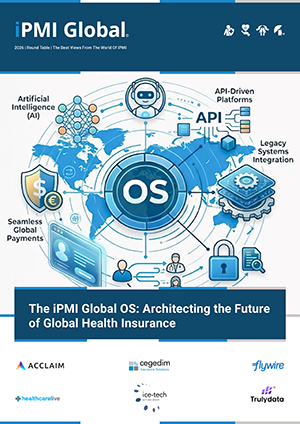
RELATED READING: The iPMI Global OS: Architecting the Future of Global Health Insurance Round Table Report
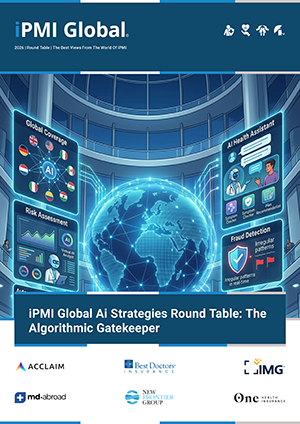
RELATED READING: The Algorithmic Gatekeeper Round Table Report: Artificial Intelligence and the Future of International Private Medical Insurance