Cigna
Cigna

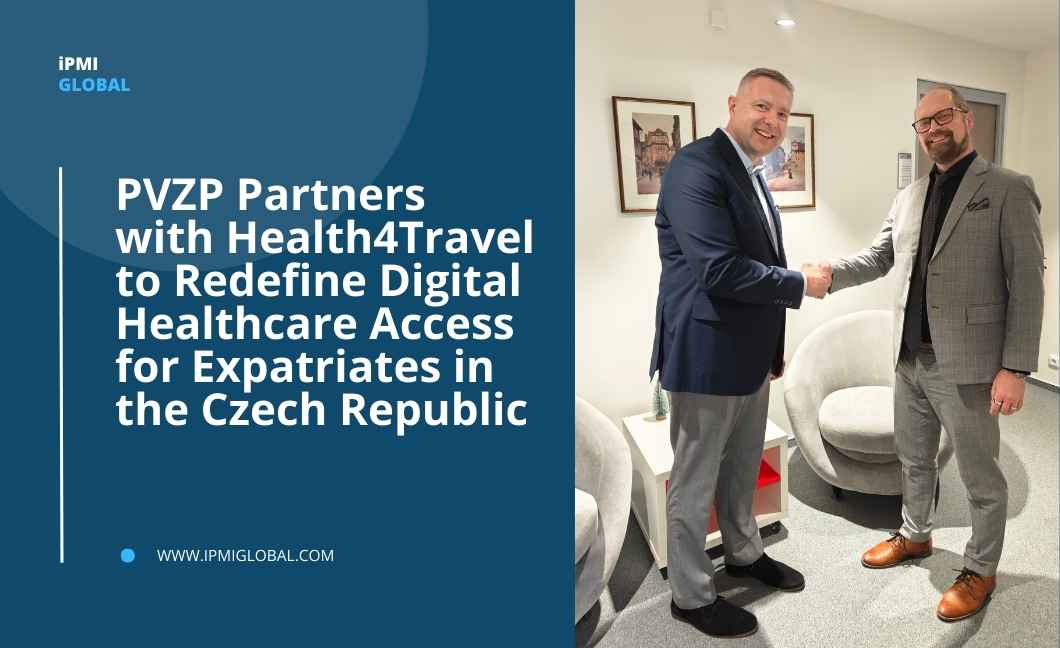
Pojistovna VZP Partners with Health4Travel to Redefine Digital Healthcare Access for Expatriates in the Czech Republic

Across Europe, access to outpatient healthcare remains one of the most persistent challenges in private and travel insurance, particularly for expatriates navigating unfamiliar and fragmented healthcare systems. What should be a straightforward medical visit often becomes complex, slow, and difficult to coordinate, creating frustration for patients and inefficiency across the insurance value chain.

Global Expatriate Healthcare Insurance Market: An Analysis of Visa Compliance Drivers

This iPMI report presents a comprehensive 2025 overview detailing the mandatory health insurance requirements for expatriates seeking long-stay visas and residency permits worldwide. This strict enforcement primarily exists to ensure that incoming foreigners can cover their own medical expenses, thereby avoiding the overburdening of local public health systems. The article emphasizes that short-term travel insurance is inadequate, noting that governments require policies that are comprehensive and long-term, covering essentials such as hospitalization, emergency care, and repatriation for the entire visa duration. Extensive regional examples show stringent compliance, particularly in the Schengen Area and the Gulf Region. Finally, the article provides practical advice, urging expats to confirm specific visa rules, avoid high deductibles, and ascertain whether the host country requires a local insurer.

Why Expatriates Require International Private Medical Insurance (IPMI): A Comprehensive Guide for Global Professionals, Families, and Employers in 2025

The Growing Need for Global Health Coverage for Expats

In a world where career and lifestyle opportunities increasingly transcend borders, more professionals and families are choosing to live and work abroad. According to Finaccord, there were around 66.2 million expatriates in 2017, growing at nearly 6% annually. Broader data from the United Nations suggests that as of 2024, there are over 300 million people living outside their birth country, accounting for 3.6% of the global population.

Behind these figures is a booming market: the expatriate health insurance industry—valued between USD 17 billion and USD 25 billion in 2024—is projected to reach USD 65–75 billion by 2035. This growth is driven by international mobility, rising healthcare costs, and the increasing importance of health security abroad.

Mitigating Global Workforce Risk: The Strategic Role of International Hospitals in Fulfilling Corporate Duty of Care

In this iPMI Global Expatriate Life article, we focus on the growing strategic importance of Western-style international hospitals for the highly mobile populations of expatriates and global travelers. It argues that these facilities, characterized by evidence-based protocols, internationally credentialed staff, and transparent administration, are crucial for mitigating clinical and non-clinical risks abroad. For insurers and global employers, a network of such hospitals provides continuity of care, facilitates claims adjudication, and ensures brand assurance, especially given the rising average and extreme costs of overseas medical claims. The text concludes that as international mobility and the related medical tourism market continue to grow, the seamless integration of these high-standard hospitals, insurance products, and mobility services is essential for managing global health risk.

Young Adult Expats Twice as Likely to Face Mental Health Struggles and 4 Times as Likely to Turn to AI Support

AXA Global Healthcare’s new Mind Health Report reveals a notable generational divide in how expats experience and manage their mental wellbeing. The fifth edition of the report shows that while older expats lean on their resilience and life experience, younger expats are more open about the challenges they face. It also highlights how younger generations are driving the adoption of AI and digital mind health tools, even though many report being adversely affected by excessive use of social media.

Why Smart Workplace Benefits are a Must for Tackling Stress Among Expats

In this iPMI Global Expatriate Life article, Virginie Faucon, relocation expert at AXA Global Healthcare talks about smart workplace benefits and how they can benefit expatriates. 

April’s Stress Awareness Month is a timely reminder that the well being of globally mobile employees is more than just a tick-box exercise – it’s a business essential. For expats adjusting to life overseas, the stresses and emotional burden of relocating can be subtle, slow-burning and all too easily overlooked. 

Loneliness And Isolation: The Hidden Struggle of Globally Mobile Workers

They’re the globally mobile professionals that work around the world in the offices of some of the largest companies – and around half are lonely. 

New research by health benefits provider Cigna Healthcare’s International Health business found that nearly half (48%), of globally mobile workers are lonely - lacking companionship in their new city or country. 

President Trump Proposes "Gold Card" Visa Program

In this iPMI Global Expatriate Life article we look at a proposed "gold card" visa program from President Trump. This initiative aims to replace the existing EB-5 investor visa with a $5 million residency permit that offers a path to U.S. citizenship. The EB-5 program, which requires a $1 million investment and job creation, has been criticized for fraud and being under priced. 

iPMI Global Expatriate Life: Aon International People Mobility Survey Report

In this iPMI Global Expatriate Life In Focus article, we explore and analyse the Aon 2024 International People Mobility Survey Report.

The Aon 2024 International People Mobility Survey Report explores evolving trends and challenges in global mobility. It highlights the resurgence of business travel, influenced by factors like inflation, talent shortages, and political unrest. The report analyses key aspects of global mobility, including business travel, long-term assignments, and remote work. It examines how companies are adapting policies to address diversity, equity, inclusion, and belonging (DEIB) and environmental, social, and governance (ESG) concerns. Compliance, cost containment, and employee well being are identified as major concerns for organizations navigating international assignments and remote work arrangements. The study provides insights into regional variations, industry-specific trends, and recommendations for optimizing global mobility strategies.

Expat Employees in Middle East Call for Workplace Pension Schemes

A survey of 1,504 expatriate workers in Qatar, Saudi Arabia and the United Arab Emirates has highlighted contrasting views on workplace benefits.

While 84% of those surveyed cited the benefits offered by their employer as playing a role in their decision to move to the Gulf, there is widespread dissatisfaction with the region’s End of Service Gratuity (EoSG) system. These one-off severance payments, a common practice in the Gulf Cooperation Council (GCC) region, are deemed insufficient for meeting retirement needs by 60% of respondents.

Best Doctors Insurance

Welcome To iPMI Global

iPMI Global is the leading business intelligence provider for international private medical, health, travel and expatriate insurance markets worldwide. Due to the nomadic nature of the international private medical insurance (IPMI) market, iPMI Global is an internet based news service for worldwide insurance and medical assistance professionals who need to understand the impacts of insurance and healthcare policy, regulatory, and legislative developments.

Senior level business executives, in over 120 countries, rely on iPMI Global to stay 1 step ahead of the risk and on the inside track of international PMI.

Covering business travellers, high net worth individuals, expatriate and leisure travel markets, iPMI Global is the only international news source covering the most exciting sector of international health insurance: international private medical insurance.

Socials